There’s a moment that happens to me more than I’d like to admit.
I finish a book. I close the cover. I sit there for a second like, wow. That was… something.
And then life does what it does. A text. A load of laundry. A random Tuesday. Another book starts. And the one that just cracked something open in me starts slipping away like a dream you can’t retell without losing the good parts.
I used to think the solution was to read more. Read better books. Read slower. Be a more serious reader. Highlight everything. Start a full reading journal and make it aesthetic, obviously.
None of that stuck.
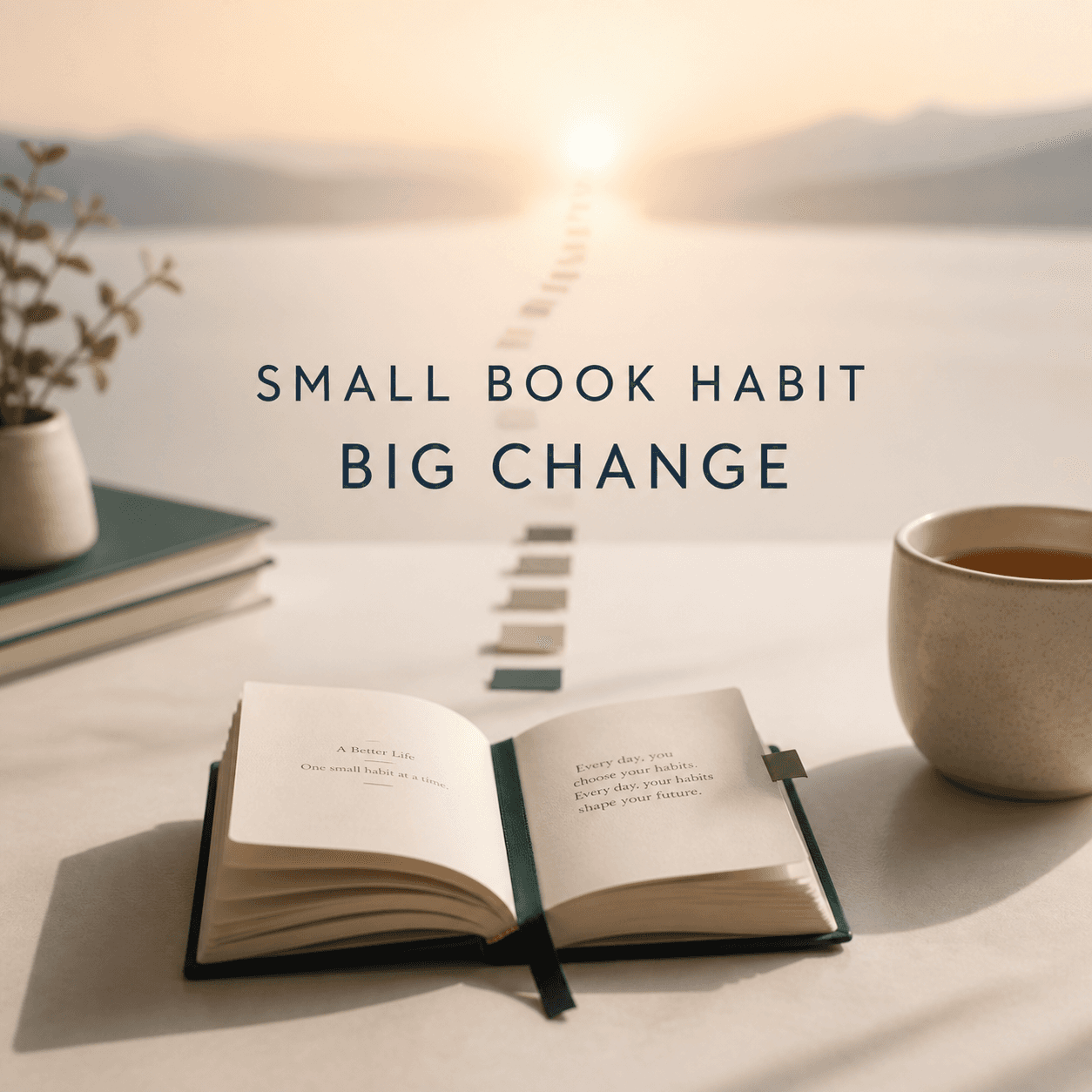
What did stick was this tiny habit that takes two minutes, feels almost too simple, and somehow makes reading feel like it actually counts in my real life.
It’s this.
After you finish a reading session, write down one line.
Not a review. Not a summary. Not a quote dump.
Just one line that answers:
“What do I want to remember from this?”
That’s it.
And yeah, it sounds… small. Almost silly. But it changes everything.
The problem is not that we forget books
We forget ourselves inside the books.
Like, you know when you read something at the exact right time in your life and it hits like a quiet bell. Not loud, not dramatic. Just true.
And you think, I’m going to remember this forever.
But then you don’t. Not really.
You remember the plot, maybe. A character name. The vibe. The twist. But that specific sentence that made you sit up straighter. The idea that made you kinder to yourself for a week. The little shift in how you saw your own story.
That’s the part that evaporates first.
Not because you’re not thoughtful. Because you’re human.
Our brains are not built to keep every soft insight that arrives while we’re half curled up on a couch at 11:47 pm. They’re built to keep us alive and remember where we put the car keys. Maybe.
So if you want reading to be more than consumption, you need a bridge. Something small and repeatable that catches the meaning before it slips away.
That’s what the one line does.
The smallest habit: The One Line Close
I call it the One Line Close, because it’s like closing the chapter on purpose, even if you’re not done with the book.
At the end of a reading session, you write one line:
- One sentence.
- One thought.
- One takeaway.
- One emotional truth.
- One “I don’t want to forget this.”
You can do it in the front cover. The back cover. A Notes app. A cheap notebook you don’t care about. A pretty journal if you do care. Anywhere.
The point is not where it lives.
The point is that it exists.
And it becomes a tiny thread you can follow back into the book later, even months later, even after you’ve become a slightly different person.
Examples (so it feels real)
Here are a few One Line Closes I’ve written over the years:
- “I keep waiting to feel ready, but ready is not a feeling. It’s a decision.”
- “This character is what happens when you confuse being needed with being loved.”
- “I want to stop reading to escape and start reading to return.”
- “Grief isn’t heavy every second. Sometimes it’s just… inconvenient.”
- “This book is reminding me that rest is allowed to be ordinary.”
Sometimes my line is about the book. Sometimes it’s about me. Honestly, it’s usually about me.
And that’s kind of the point.

Why this works (even if you hate journaling)
I used to resist “reading journals” because I thought they required a personality upgrade. Like you had to be the type of person who tracks books in spreadsheets and color codes themes and makes tabs.
Some people love that. I genuinely admire it.
But a lot of us just want a practice that feels warm and doable and not like homework.
The One Line Close works because:
1. It’s too small to negotiate with
Your brain can’t really argue with one sentence.
Ten minutes of journaling? Now we’re bargaining. Now we’re tired. Now we’re suddenly very interested in reorganizing the pantry.
One sentence is sneaky. You can do it even when you’re half asleep.
2. It trains you to read with a tiny bit more presence
When you know you’ll write one line afterward, you start noticing what matters while you read.
Not in a tense way. Not in a school way.
More like… you’re listening.
3. It makes books re-readable without re-reading
When you flip back through your lines later, it’s like you’re rereading the impact instead of the pages.
And the impact is what you were chasing anyway.
4. It turns reading into a relationship
A relationship needs reflection. Not constant analysis. Just a moment of, what did that do to me?
The One Line Close is that moment.
How to do it without overthinking (a simple method)
Here’s the most frictionless version. No fancy supplies required.
Step 1: Pick your place
Choose one location for your one lines.
Options:
- Inside the book (front or back blank page)
- A notes app (one running note called “One Line Closes”)
- A tiny notebook that lives with your current read
- A page in your journal reserved for one lines only
If you’re the kind of person who loses notebooks, pick your phone.
If you’re the kind of person who wants less screen time, pick paper.
Step 2: Use a prompt that makes it easy
At the end of each session, answer one of these:
- “What do I want to remember?”
- “What line is still echoing?”
- “What did this scene make me realize?”
- “What do I feel right now, in one sentence?”
- “If I could keep only one thing from today’s reading, what is it?”
Step 3: Stop at one line on purpose
This is important. The restraint is the magic.
If you feel like writing more, you can. But the habit is one line. That’s the floor. The promise.
Most habits fail because the floor is too high.
Make yours so low you can step over it.

What starts to happen after a week (the quiet shift)
The first few days, it feels like nothing. You write a sentence. Okay.
Then you notice you’re finishing reading sessions with a softer kind of satisfaction. Like you didn’t just scroll through a story. You received something and set it down carefully.
Then, a few more things start happening.
You remember books differently
Not just what happened, but what it meant to you.
And when someone asks, “How was it?” you don’t panic and say “Good!” like a person who has never had a thought in their life.
You have a real answer.
You build a personal map of your seasons
This is one of the best parts.
When you look back at your one lines, you can literally see what you were going through.
Some months your lines are all about boundaries. Some months they’re about grief. Some months they’re about softness, or courage, or starting again.
You’re tracking your inner life, without trying to.
You start trusting your own taste more
Because you’re not just rating books. You’re noticing what changes you.
That makes you a better chooser of what to read next, too.
Not “what’s popular” but “what do I need?” or “what do I want to explore?”
“But what if I don’t know what to write?”
You will. But also, you won’t sometimes. That’s normal.
On days when your brain is blank, use one of these “easy mode” lines:
- “Today I noticed…”
- “I loved…”
- “I didn’t expect…”
- “This part is making me feel…”
- “I want to ask the book…”
- “I think the point might be…”
Or write the simplest truth:
- “I’m not sure yet, but something about this feels familiar.”
That counts. That totally counts.
The one line habit pairs perfectly with a cozy reading life
This is where I’ll get a little GlimmerReads about it, because this habit is basically the heartbeat of what we do around here.
GlimmerReads is all about reading as an intentional practice. Not in a rigid way. In a gentle way. The kind that supports balance, resilience, and personal growth without turning books into self improvement projects.
The One Line Close fits that vibe because it doesn’t demand a new identity.
It just asks you to notice.
If you want to go a step further, you can keep your one lines and revisit them once a week. That’s actually how The Weekly Chapter newsletter themes are meant to feel too. Like you’re building meaning in small installments, not cramming it all into one perfect journaling session you never do.
If you’re not subscribed and you want a calm nudge to keep reading intentionally, you can join The Weekly Chapter over on https://glimmerreads.com. It’s cozy, it’s structured, and it doesn’t yell at you.
A slightly deeper version (if you want it, not if you “should”)
Once the one line habit feels natural, you can add a tiny optional second line. Optional means optional.
Here are three add ons that still keep it small:
Option A: The “Because” line
- One line takeaway.
- One line starting with “Because…”
Example:
- “I keep trying to earn rest.”
- “Because I still believe rest has to be justified.”
Option B: The “Carry it into life” line
- One line takeaway.
- One small action.
Example:
- “I want more quiet mornings.”
- “Tomorrow I’ll leave my phone in another room for the first 20 minutes.”
Option C: The “Question” line
- One line takeaway.
- One question you’re curious about.
Example:
- “This book makes loneliness feel less shameful.”
- “What would change if I treated loneliness like weather instead of failure?”
Again. Only if it feels good. If it starts feeling like homework, go back to one line.
What to do with your one lines later (so they don’t just sit there)
Here are a few ways to actually use them, without turning it into a project:
1. Before you start a new book, read your last five lines
It takes 30 seconds.
It recenters you. It reminds you that reading has continuity. Like your life does.
2. When you’re in a slump, reread your lines instead of forcing a book
Sometimes the slump is not about reading.
Sometimes it’s about disconnection.
Your lines bring you back.
3. Turn your favorite lines into a “Commonplace page”
Once a month, copy two or three of your best one lines onto a single page. Title it something simple like:
- “Things I want to remember”
- “Lines that held me”
- “This year, in books”
That page becomes a little anchor.
4. Share one line with a friend or a book club
This is honestly such an easy way to talk about books without doing the whole “what did you think” dance.
Just share the line. Let that be the conversation.
If you’re looking for that kind of gentle, reflective community, GlimmerReads also has a book club vibe built around connection and support. Not performative smartness. Just real readers living real lives.
The smallest habit is small on purpose
I think we underestimate what small things can do when they’re repeated.
A single line feels like nothing. But over time, it becomes a trail.
A trail of what moved you. What steadied you. What you were brave enough to notice.
And that, to me, is the real point of reading. Not to finish more books. Not to impress anyone. Not to keep up.
To be changed. Quietly. Repeatedly.
To pick up someone else’s words and somehow end up closer to your own.
A tiny challenge (if you want one)
Tonight, after you read even two pages, do the One Line Close.
Write one sentence that starts with:
“I want to remember…”
That’s all.
Then tomorrow, do it again.
By the end of the week, you’ll have seven lines. Seven small receipts of your own attention. And I’m telling you, it feels different. Reading starts to feel like it’s staying with you.
Like it’s coming home with you.
If you want more prompts like this
If you liked this kind of simple, cozy, actually doable reading reflection, you’ll probably like the journaling prompts and reading essays in the Reading Room on https://glimmerreads.com.
And if you want a gentle weekly structure, you can subscribe to The Weekly Chapter newsletter there too. Same energy. Small habits, meaningful reading, no pressure to be perfect.


No responses yet